

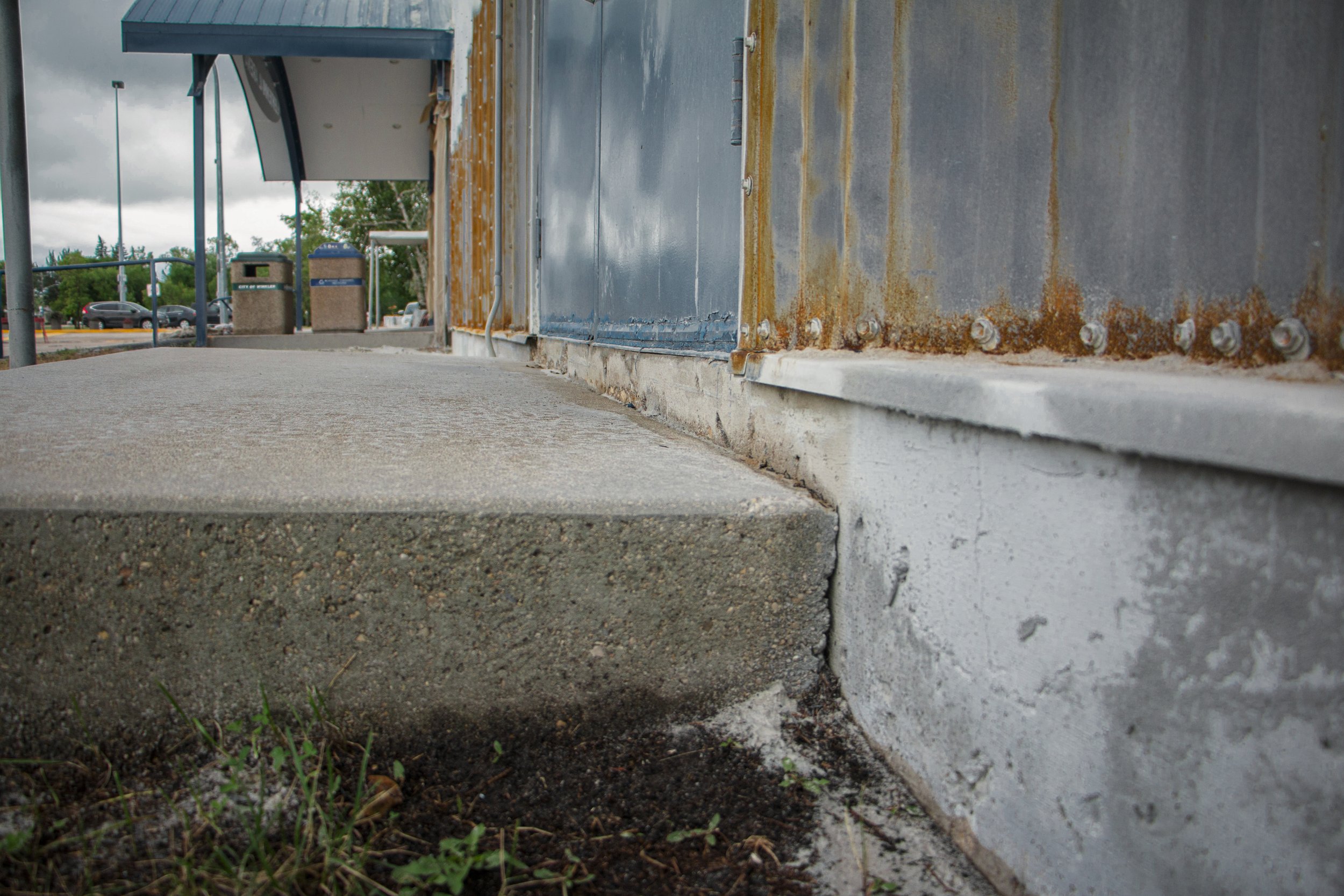
Uneven concrete?
We can lift it back into place.
Concrete around your home doesn’t always stay level. As the ground beneath it shifts, driveways, sidewalks, patios, and pool decks can begin to settle, slope, or separate.
In many cases, the slab doesn’t need to be removed. It can be lifted, stabilized, and restored.
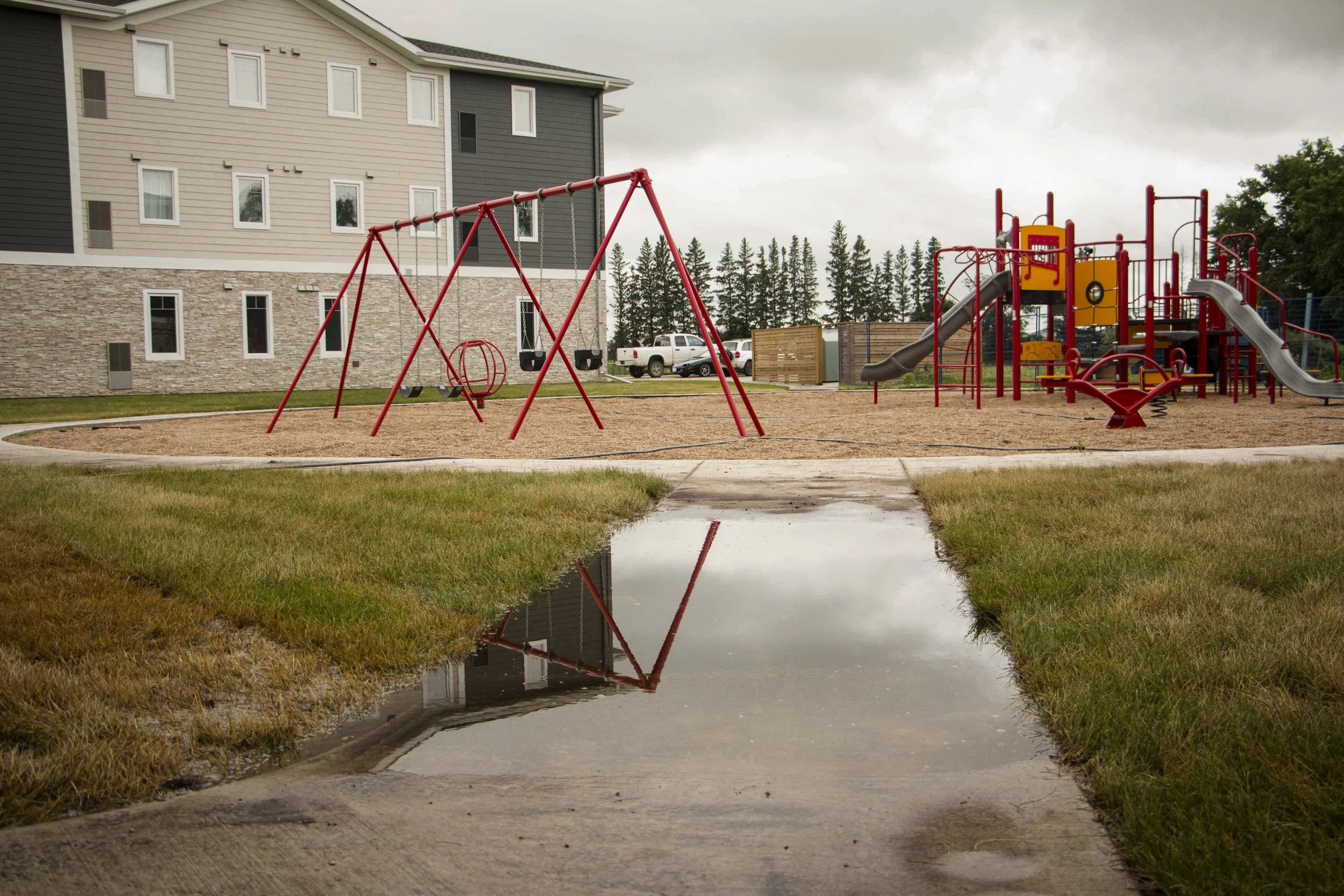
Why Concrete Settles
Uneven concrete doesn’t always need to be removed and repoured.
Concrete lifting restores the slab by filling the empty space beneath it and raising the surface back toward level.
Using specialized polyurethane material, we inject beneath the concrete to stabilize the soil and gradually lift the slab into position.
The result:
leveled surfaces
improved drainage
safer walkways
restored appearance
Most projects are completed in a single visit.
Lift instead of Replace
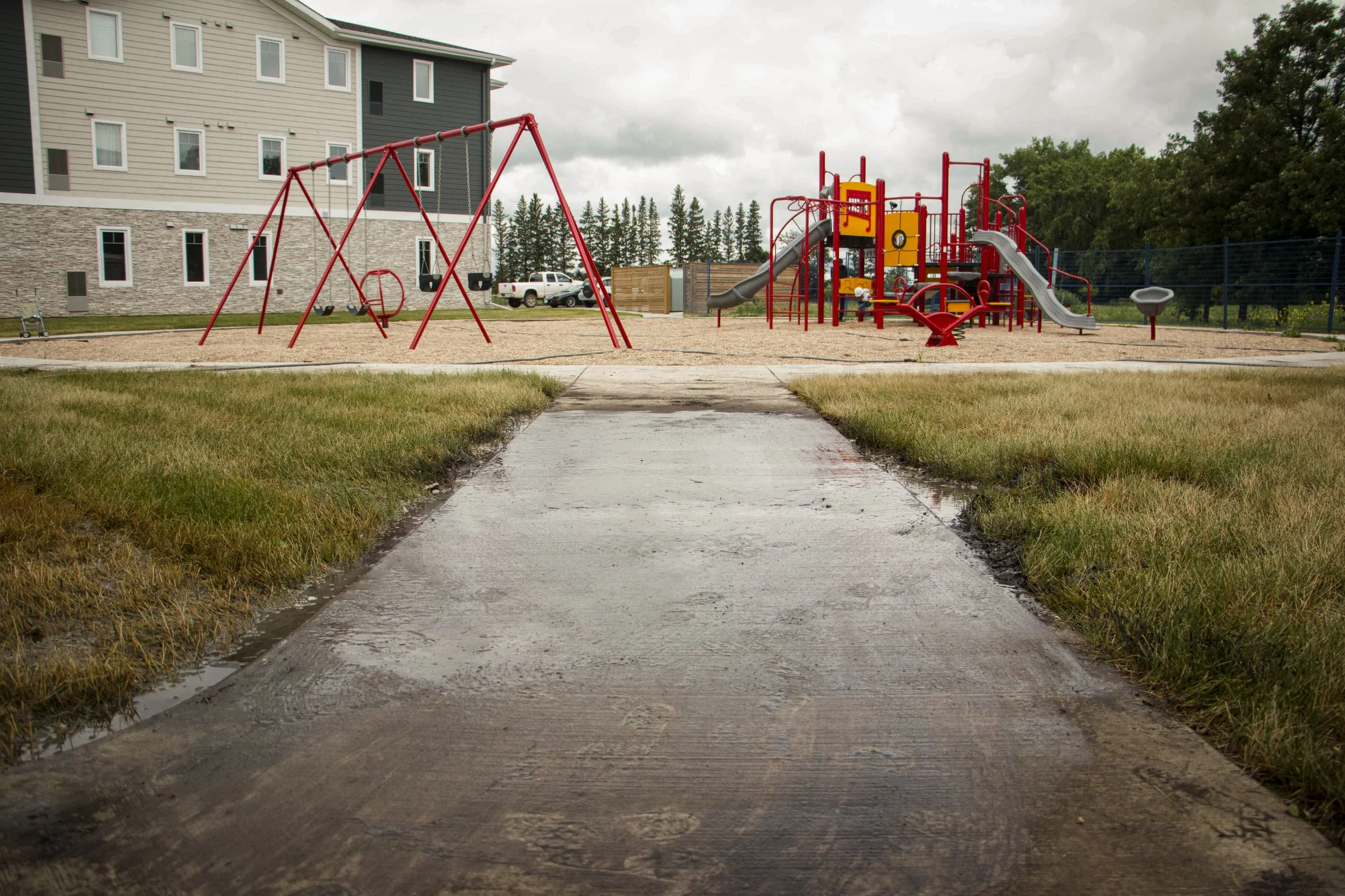
Over time, the soil beneath a concrete slab can shift, compact, or wash away.
Freeze-thaw cycles, drainage issues, and natural ground movement often create empty space beneath the surface — something we see often across southern Manitoba.
When that support disappears, the slab begins to settle.
You may notice:
driveways sloping toward the garage
sidewalks creating trip hazards
patios settling away from the house
water draining toward foundations
Many of these surfaces can be corrected without replacing the concrete.

The Process
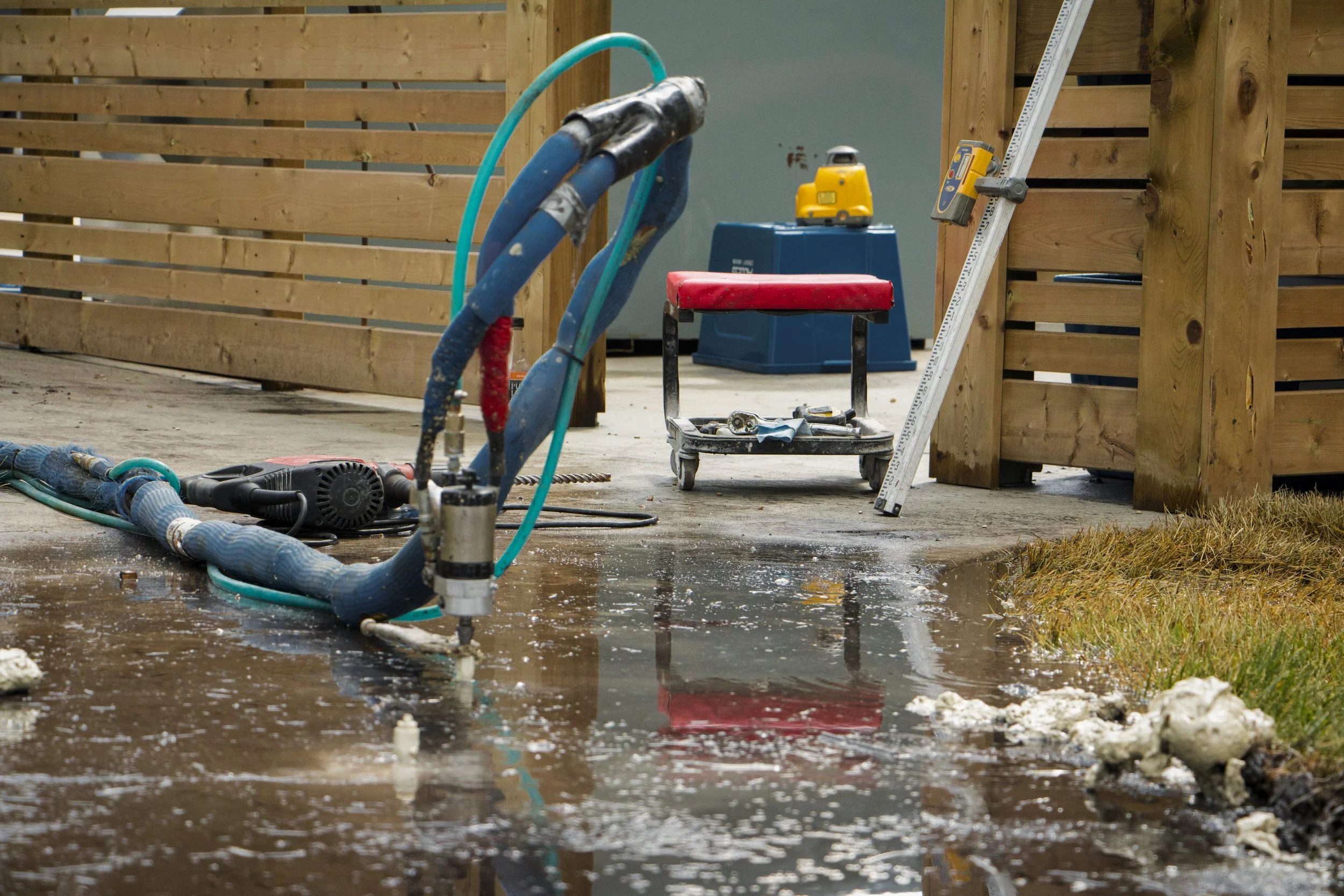
Concrete lifting is a precise process designed to stabilize the slab and restore the surface with minimal disruption.
-
We begin by evaluating the concrete and the conditions beneath it.
Every project is different. We assess the amount of settlement, identify where the slab has lost support, and determine whether lifting is the right solution.
In some cases, soil movement, drainage, or voids beneath the slab are the cause. Our assessment helps us determine the best approach and provide a clear plan for restoring the surface.
-
We drill small, carefully placed access holes in the concrete.
These openings allow us to inject material beneath the slab exactly where support is needed, while keeping disruption to the surface minimal.
-
A specialized polyurethane material is injected beneath the slab.
As it expands, it fills empty space, stabilizes the base, and gradually lifts the concrete back toward level. The process is controlled carefully to achieve a precise result.
-
Once the slab is restored, the access holes are patched and the site is cleaned up. The surface is left stable, functional, and ready to use much sooner than full replacement.
Watch How Concrete Lifting Works
This short video shows how material is injected beneath the slab to fill voids, stabilize the base, and lift the concrete back into position.
Frequently Asked Questions
Concrete lifting is still unfamiliar to many property owners. Here are answers to some of the questions we hear most often when assessing settled concrete.
-
Concrete lifting restores support beneath a settled slab without removing or replacing the concrete.
Small access holes allow a specialized polyurethane material to be injected beneath the slab. The material expands to fill voids in the soil, stabilizing the base and gently raising the concrete back toward level.
Because the lifting occurs from below, the existing concrete surface can often be restored with minimal disruption to the surrounding area.
-
The polyurethane material used in the lifting process is inert once cured and designed specifically for soil stabilization.
It does not wash away, dissolve, or degrade in the ground, and it will not harm surrounding landscape areas or vegetation. Because lifting restores the existing slab rather than replacing it, the process also reduces demolition waste and material disposal.
-
In many situations, yes.
Concrete replacement involves demolition, removal, new base preparation, forming, and curing time. Lifting focuses instead on restoring support beneath the existing slab.
When the concrete surface itself is still in good condition, lifting can provide a practical and significantly less disruptive alternative to replacement.
During an assessment we determine whether the slab is structurally suitable for lifting or if replacement would be the better long-term solution.
-
When the underlying cause of settlement is addressed, lifted concrete can remain stable for many years.
The expanding material used in polyurethane lifting compacts loose soils and fills voids beneath the slab, helping restore the support that was lost over time.
Like any surface exposed to weather, drainage conditions and soil movement still influence long-term performance, but properly lifted slabs often remain stable for the life of the concrete.
-
Small access holes are required to reach the space beneath the slab. Once lifting is complete, these holes are carefully sealed and color-matched as closely as possible to the existing surface. In most cases they are barely noticeable.
After
Before
Wondering if your concrete can be lifted?
We can assess the surface, identify the cause of settlement, and determine whether lifting is the right solution.